Your Phone Migration Is Planned. So What Happens to the Lift?
The analogue network switches off on 31 January. Migrating a phone system is a well-understood job. The exposure sits in everything else quietly hanging off a copper line, none of which appears on anybody's asset register.
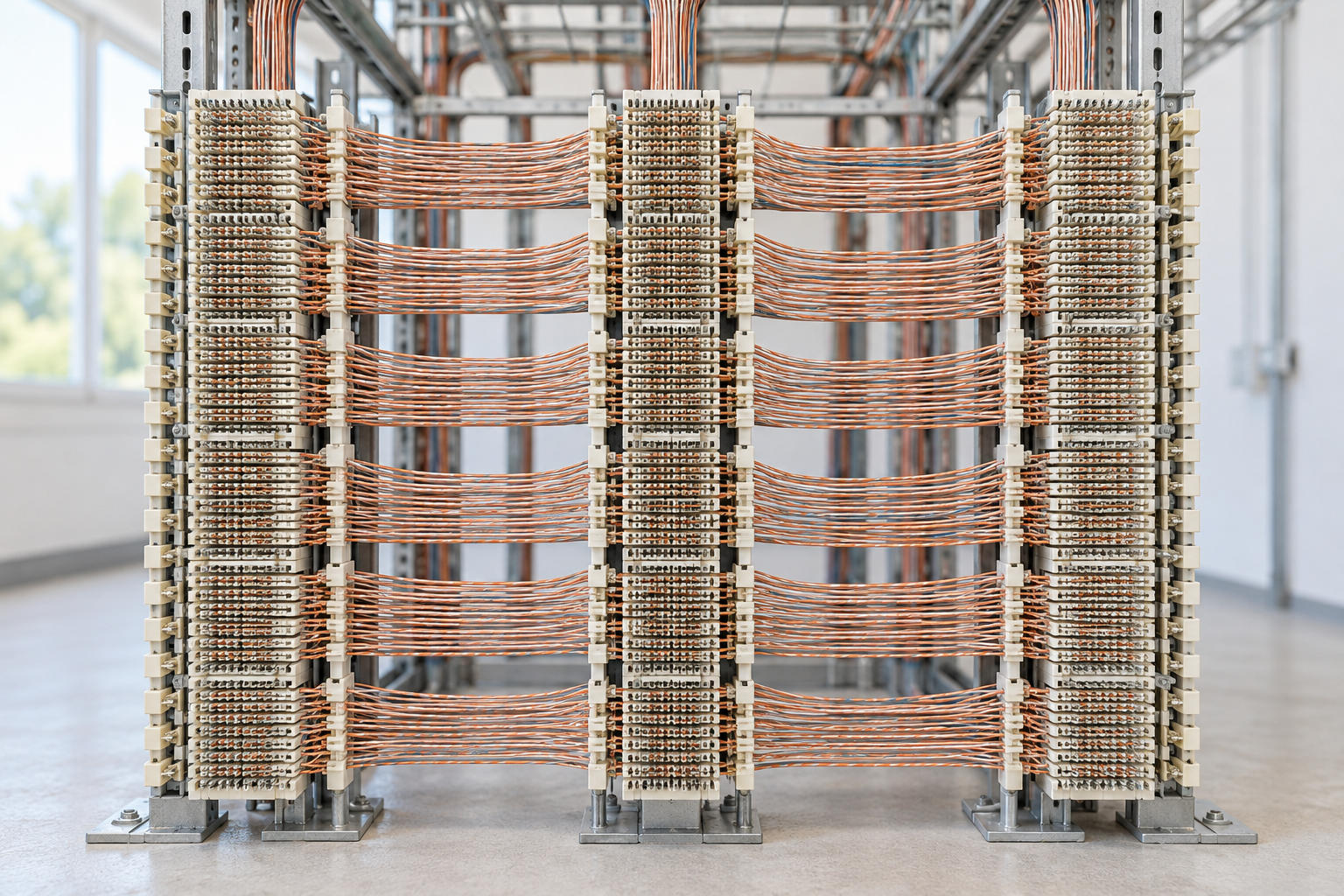
The analogue network switches off on 31 January, and Openreach has been clear there will be no further extension. That is a hundred and nine days from today.
Around a million and a half lines were still on the old network in July. Roughly three hundred and fifty thousand of them belong to businesses.
1. The Phones Are the Straightforward Part
Migrating a telephone system is well understood work — the products exist, the suppliers are competent, and most organisations started this years ago.
For anyone who has already done it, the experience is usually unremarkable. Numbers port, handsets change, people complain for a fortnight and then stop complaining.
Which is why the telephony migration is almost never where this goes wrong.
2. The Exposure Is What Hangs Off the Line
A copper line does a great deal more than carry conversations, and most of it was installed by somebody who was not thinking about telephony at all.
Lift emergency phones. Intruder and fire alarm panels that dial out to a monitoring centre. Door entry systems, card terminals, franking machines — and telemetry on assets sitting in a field somewhere, reporting back twice a day.
Each was specified separately, by a different function, often a decade apart, and installed by a contractor who has long since moved on.
3. Nobody Has the List
Here is the part that makes this difficult rather than merely tedious.
The migration everybody planned is the phone system. The one that will go wrong is the device nobody listed — because it was never anybody’s telephony in the first place.
These things appear on an asset register as a lift, an alarm, a meter. Very rarely as something depending on a line that stops working in January — which is the only attribute that matters this winter.
4. They Sit Across a Boundary
The reason the list does not exist is organisational rather than technical.
Facilities owns the lift. IT owns the telephony. The line into the lift car belongs to neither of them in any way either would recognise — and has been quietly paid for on a bill nobody reads line by line.
That is not negligence. It is what happens to anything sitting exactly on a boundary between two functions that are both well run.
5. The Fallback Will Not Catch You
There is an emergency voice service being piloted, and it is worth understanding what it is not.
It carries voice only, on single residential lines. It does not carry broadband, and it does not carry alarm or lift signalling — and it is not available on business lines at all.
A business line still running on analogue on the first of February simply stops. There is no graceful degradation behind it.
6. The Date Already Moved Once, for Good Reasons
It is worth being fair about the history. The original deadline was December 2025, and it was pushed back partly to protect telecare users and vulnerable customers.
That was the right call, and an uncontroversial one. Moving a deadline rather than risk harming people who depend on an alarm pendant is exactly what a regulator and an operator ought to do.
It also had a predictable side effect. A date that moves once creates a quiet belief in some organisations that it might move again, and that belief is doing real damage.
7. How to Find What You Cannot See
The list has to be built, and it cannot be built from an asset register. Four routes between them find most of it:
- the itemised line rental bill, read line by line against known locations
- a walk round each site with whoever maintains the lifts and the alarms
- the maintenance contracts, which usually name the signalling method
- the supplier of each device, asked directly what it dials and how
The first is the fastest route and the one most often skipped — because somebody has to ask for a bill nobody has examined properly in years.
8. Waiting Now Has a Price
Wholesale rental on the remaining analogue lines rises again this month, and that is deliberate.
Deferring this used to be free, which is a large part of why so much of it was deferred. It is not free any longer, and the cost now arrives monthly on something the organisation is already paying for.
For anything with a safety function attached, the arithmetic is simpler still. A lift phone that does not work is not a telephony fault.
Final Thought
Most organisations will complete this migration without incident — and will be quietly surprised by one or two things turned up in December.
The ones that have trouble will not have missed a deadline. They will have migrated exactly what was on the list, which was never the same thing as everything on the line.